ছবি: ফাইল ছবি
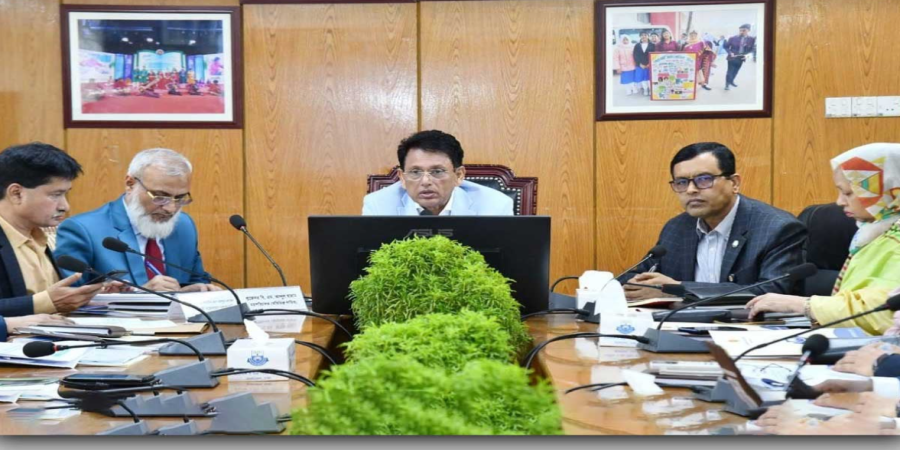
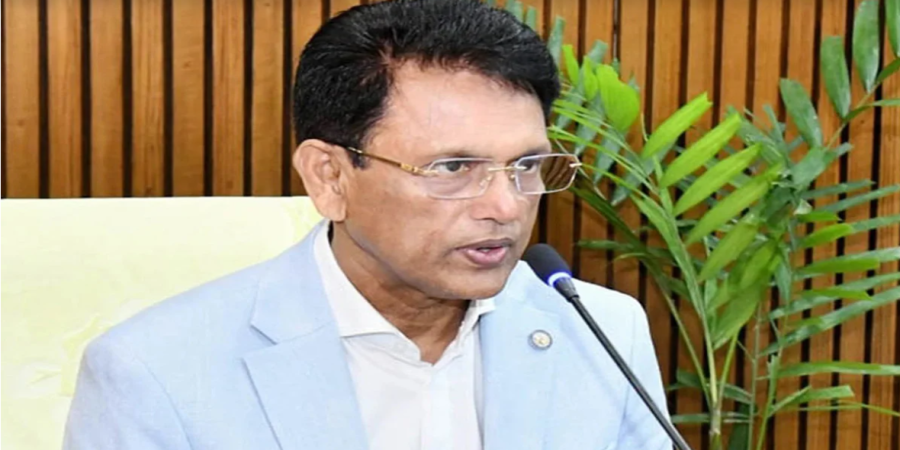
The government has adopted a strict stance against question leaks and cheating ahead of the upcoming Secondary School Certificate (SSC) and equivalent examinations, according to Education Minister A N M Ehsanul Haque Milon. He stated that maintaining the integrity and credibility of the examinations is a top priority and that strong monitoring will be ensured at the field level to prevent any irregularities. Speaking at a post-iftar discussion meeting with members of the Education Reporters Association of Bangladesh at his official residence on Minto Road in the capital, the minister said that coordination meetings will soon be held with officials from all education boards and other stakeholders involved in the examination process. The SSC and equivalent examinations are scheduled to begin simultaneously across the country on April 21, and the minister acknowledged that ensuring a completely cheating-free environment will be a major challenge for the government. However, he expressed confidence that, as in previous years, authorities will successfully manage the situation and conduct the examinations smoothly. He warned that any attempt to leak question papers using information technology would be dealt with strictly under the law and emphasized that he is prepared to personally visit examination centers to supervise security and monitoring arrangements if necessary. The minister also indicated that the government is considering introducing a unified question paper system for all education boards in the country in the future. According to him, students across the country should be evaluated under the same standard, and many major competitive examinations around the world are conducted using identical question papers. Discussions are already underway within the ministry to explore how such a system could be implemented from next year. Describing the education ministry as his “place of devotion,” the minister said he aims to implement a 180-day action plan that will create a foundation capable of bringing long-term transformation to the national education system. His goal, he added, is to move forward cautiously and steadily to ensure that no misguided decisions harm the education sector. He also revealed that the government is planning to introduce a three-tier screening process for selecting chairpersons of school managing committees to ensure transparency and proper qualifications. This proposed system would involve the Upazila Nirbahi Officer, the Deputy Commissioner, and representatives from the relevant education board. Addressing the controversy surrounding the requirement of 18 years of experience in certain recruitment processes, the minister explained that the condition has been logically restructured to provide opportunities for teachers who were deprived over the past 15 to 17 years for various reasons. In addition, he highlighted the revision of the national curriculum and textbooks for 2027 as one of his key missions during his tenure. Expressing dissatisfaction with the pace of work among ministry officials, the education minister urged them to move away from traditional slow administrative practices and complete tasks with greater speed and efficiency. He stressed that government officials are not appointed to pursue personal interests but to serve the country and contribute to the improvement of the education system. Through coordinated efforts, he believes that the government will be able to establish a transparent and fair examination environment in the future, ensuring that students across Bangladesh can participate in examinations free from question leaks and cheating while maintaining confidence in the country’s education system.
reporter