ছবি: সংগৃহীত ছবি
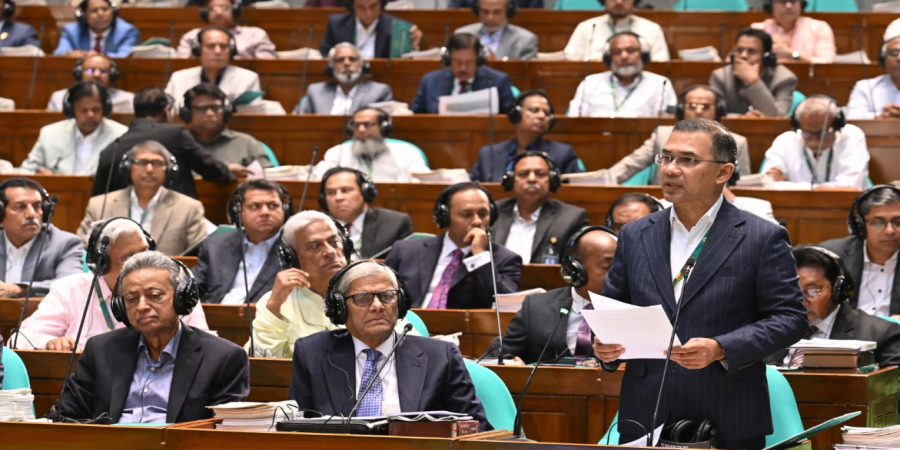
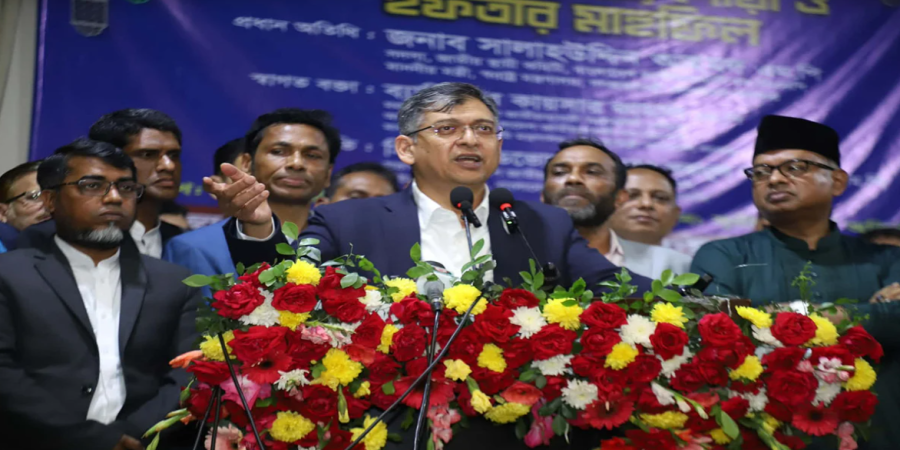
Home Minister Salahuddin Ahmed has stated that the government is not only committed to implementing the July National Charter but also determined to fulfill all the promises made in its election manifesto. He said the government considers itself bound by the mandate given by the people through their votes and is determined to implement every commitment made to the nation. The Home Minister made these remarks while speaking as the chief guest at a discussion meeting, prayer, and iftar event organized by the Bangladesh Nationalist Lawyers’ Forum at the auditorium of the Supreme Court Bar Association in Dhaka. The event was chaired by the organization’s president, Senior Advocate Zainul Abedin MP, while the welcome speech was delivered by the forum’s secretary general and State Minister for Land, Barrister Kaiser Kamal. The president of the Supreme Court Bar Association, Barrister Mahbub Uddin Khokon MP, also spoke as a special guest at the program. Addressing the gathering, the Home Minister said that every word and phrase of the July National Charter is important to the government and that it remains fully committed to implementing it. According to him, the charter is not merely a political document but an important agreement reflecting political consensus among several parties. He also noted that some of the political actors who are now criticizing the charter had signed it only after the national election. He explained that the charter includes provisions where certain parties have expressed reservations through “notes of dissent.” In such cases, if those parties secure a public mandate through their election manifestos, they will have the opportunity to implement their respective proposals. The minister further said that initially four political parties could not sign the July National Charter for various reasons. However, some of those parties later signed the agreement. He also observed that a few parties that had strongly criticized the charter eventually signed it after the election once political circumstances changed. He emphasized that if any party disagrees with the charter, it should clearly state the reasons for its reservations instead of creating unnecessary controversy. The Home Minister also stressed the importance of governing the country in accordance with the constitution. He said the government has been operating within the framework of the constitution and intends to continue doing so in the future. Regarding the issue of a referendum, he explained that if any matter is to be decided through a public referendum, it must first be discussed in the national parliament, followed by legislation and necessary amendments to the constitution. Only after completing those legal steps would such a referendum process gain full constitutional legitimacy. Referring to recent oath-taking controversies, he said that the legality of those actions must be examined by the Supreme Court, since judges have sworn to uphold and protect the constitution. He also mentioned that during the tenure of the interim government, a total of 133 ordinances were issued. According to constitutional requirements, these ordinances must be presented during the first session of the national parliament. However, it is up to parliament to decide whether those ordinances will be approved, amended, or allowed to lapse. The Home Minister emphasized that the national parliament is the supreme institution of the state, while members of parliament represent that sovereign authority. Their votes, he said, are not merely legal votes but constitutional votes that carry significant authority in the legislative process. While votes in a referendum have legal importance, he added, the constitutional authority of parliamentary voting holds greater significance in the governance system. According to him, strengthening the democratic system of the country requires respect for the constitution and a strong commitment to parliamentary procedures.
reporter