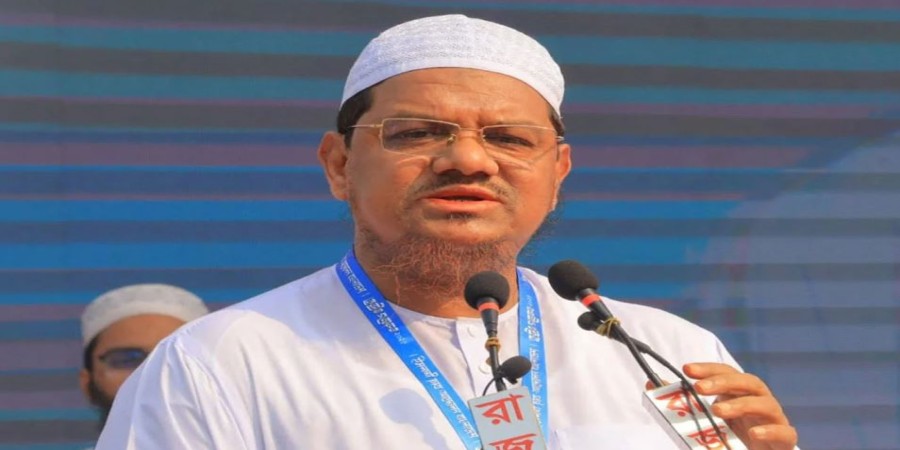
ছবি: মুফতি সৈয়দ মুহাম্মাদ রেজাউল করীম
In the evolving electoral landscape, discussions involving Islamic political platforms, alliances, and ideological commitments have come into sharp focus, following statements suggesting that a segment of Islamic politics has used religious identity instrumentally to pursue unilateral political power rather than collective ideological goals. At a recent rally, party leadership argued that the aftermath of public unrest the previous year had opened a rare window for political reform centered on anti-corruption and social justice, along with the promise of implementing values rooted in faith. According to the speaker, this opportunity required unity among like-minded groups; however, instead of consolidating efforts under a shared framework, one faction allegedly prioritized securing political advantage and foreign engagement to strengthen its competitive position. The claim further implied that this strategic maneuvering weakened broader Islamic unity and potentially eroded public confidence in the sincerity of faith-based politics in general. The remarks emphasized that invoking Islamic symbolism without offering a transparent and workable model of governance could undermine the credibility of a movement that seeks legitimacy from both tradition and contemporary accountability norms. Observers note that among younger voters, political Islam now operates within a new standard of scrutiny: they may support Islamic identity in the public sphere, but they also expect internal cohesion, clarity, and ethical conduct from movements that claim moral authority. The speech suggested that ideological coalitions are expected to demonstrate trust, shared purpose, and consistency, and when these are disrupted by strategic secrecy or opportunism, the political costs extend beyond immediate electoral calculations. Analysts argue that such tensions expose two competing logics: the logic of mass ideological mobilization versus the logic of coalition-based electoral pragmatism. The former seeks long-term legitimacy through consistent advocacy, while the latter often prioritizes short-term gains through negotiations and power bargaining. The interplay between these logics has intensified debate about whether Islamic politics can maintain unity without compromising its foundational claims. Public discourse around the issue has expanded on social media, where supporters of a more unified Islamic platform argue that fragmented strategies reduce political leverage and diminish the potential for faith-based reform in governance. Others contend that plurality, negotiation, and strategic adaptation are inevitable in democratic competition. For political scientists, the current moment illustrates a broader question facing religiously oriented movements globally: can religious symbolism coexist with modern demands for procedural transparency and coalition discipline? As the upcoming election draws nearer, the stakes of this debate rise further; if Islamic factions remain divided, analysts predict that their electoral relevance may shift from being a cohesive ideological bloc to serving as fragmented bargaining chips within a more complex power matrix. Meanwhile, grassroots activists maintain that social trust is central to Islamic political legitimacy and that younger constituents now view religious rhetoric without institutional accountability as insufficient. Whether the contested claims reflect ideological betrayal or tactical realignment, the situation underscores how narratives of unity, loyalty, and moral purpose remain central in shaping the future trajectory of Islamic political engagement in the country.
reporter