ছবি: Photo: Collected
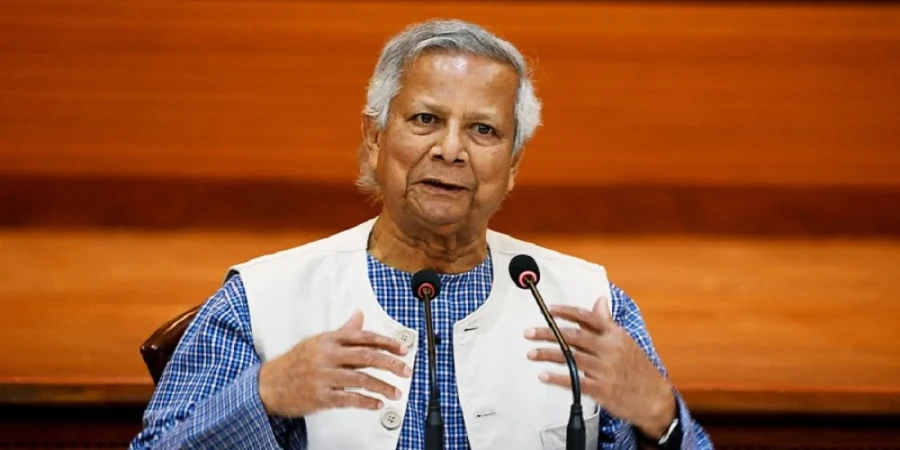
Chief Advisor Professor Muhammad Yunus has issued a stirring call to the nation, urging all citizens to unite in building a Bangladesh where autocracy can never take root again. Marking the anniversary of the July Uprising, he emphasized the historic responsibility to protect the sacrifices made by thousands of martyrs and to carry forward the promise of a reformed, democratic state.
In a statement released on Monday, ahead of the observance of the July Uprising Day on August 5, Professor Yunus described the movement as a new beacon of hope for the country. He acknowledged the immense sacrifices made during the uprising, noting that the bloodshed and struggle of ordinary citizens have opened an opportunity for deep state reform—an opportunity that, he said, must be safeguarded at any cost.
“The fallen autocracy and its self-serving allies remain active in their efforts to derail our progress,” Yunus warned. He called on all political groups, institutions, and citizens—regardless of party affiliation—to stand united against these conspiracies. According to him, national unity is essential for ensuring that Bangladesh never again falls under authoritarian rule.
Reflecting on the events of one year ago, Yunus said that August 5 stands as an unforgettable milestone in the nation's history. It marks the culmination of the July Uprising, which brought an end to years of fascist governance and returned a long-suppressed voice to the people of Bangladesh. He extended his heartfelt congratulations to the people whose unrelenting resistance transformed a movement into a historic achievement.
In his message, Professor Yunus paid tribute to the brave youth, laborers, working-class citizens, and professionals who laid down their lives in the face of oppression. He also expressed deep gratitude to the wounded and permanently disabled freedom fighters of the July Uprising. Their sacrifices, he said, are engraved in the heart of the nation and must be remembered with honor and reverence.
He reaffirmed that the primary goal of the uprising was to establish a new political order—free from inequality, corruption, and authoritarianism. The aim, he stressed, was not just to bring down a regime, but to recover democracy and return the power of the state to its rightful owner: the people.
Since the assumption of power by the interim government, Yunus stated, major reforms have been undertaken across all branches of the state to fulfill the aspirations of the uprising. He noted that justice for the victims of the July massacre is progressing swiftly and that steps have been initiated to preserve the memory of the martyrs while also rehabilitating those injured in the movement.
The Chief Advisor further explained that reforms are not limited to institutional restructuring. Political dialogue is actively ongoing with various political parties and stakeholders to accelerate the nation’s democratic journey. According to him, reforming the electoral and political systems is critical to laying the foundation for lasting peace and stability.
Professor Yunus concluded by reaffirming the interim government’s commitment to handing power back to the people through peaceful, free, and fair elections. He reiterated that the future of Bangladesh must be shaped by the will of its citizens, not by the interests of a privileged few.
His message serves as a powerful reminder that the July Uprising was not the end of a struggle but the beginning of a new national mission. A mission to build a fair, democratic, and inclusive Bangladesh where no space remains for autocratic ambitions to flourish.
reporter