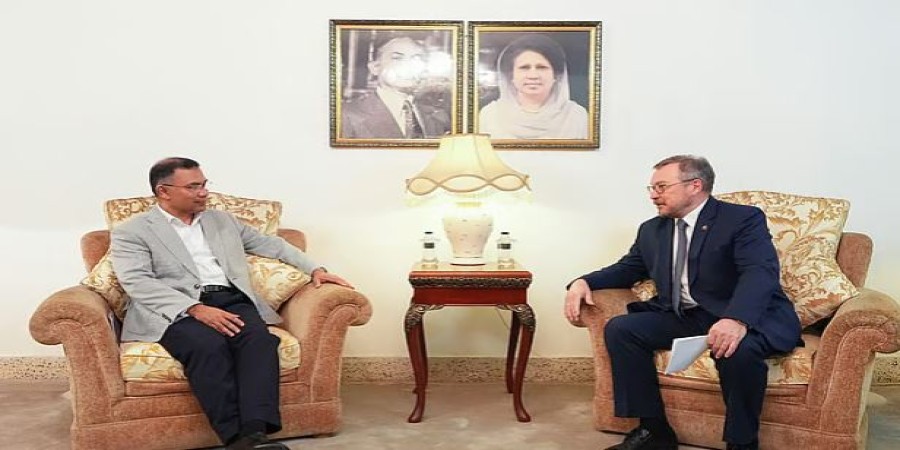
ছবি: বাংলাদেশে নিযুক্ত রাশিয়ার রাষ্ট্রদূত আলেকজান্ডার গ্রিগোরিয়েভিচ খোজিন দুপুর ১২টার দিকে বিএনপি চেয়ারম্যান তারেক রহমানের সঙ্গে দেখা করেন
A series of diplomatic courtesy calls took place in Dhaka as envoys from Russia, Sweden, Denmark and Norway met with BNP Chairperson Tarique Rahman at his Gulshan office, prompting renewed political and diplomatic attention concerning Bangladesh’s post-election political landscape, opposition participation and international engagement channels. According to the party, the envoys arrived separately from noon through the afternoon and held discussions in the presence of senior BNP officials including joint secretaries, advisers, international affairs representatives and media aides. While routine for diplomatic practice, the timing and composition of the meetings drew analytical interest, as the opposition is currently active through rallies, engagements and regional tours, while the international community continues to monitor topics spanning governance, democracy, rule of law, security, economic stress and post-election political transitions. Analysts suggested that the meetings reflect a dual incentive: the opposition seeks visibility, legitimacy and dialogue platforms, whereas international actors aim to assess political conditions, humanitarian implications, policy continuity, and investment or bilateral interests. The presence of Nordic envoys indicated potential emphasis on rights, democracy, social welfare, civil liberties and sustainable development, while Russia’s envoy added geopolitical and regional-security dimensions. Recent political activities—including constituency-level engagements, public outreach, and symbolic policy messaging around social housing, urban poverty and civic welfare—were seen as part of a broader strategy to rebuild political momentum. Although BNP did not disclose the detailed agenda of the meetings, the party indicated that discussions touched on social protection, political participation, governance challenges and future development pathways. Diplomatically, such engagements often serve as indirect signaling mechanisms among political actors and external observers and may shape future dialogues on trade, aid, migration, energy, security, or policy partnerships. The meetings also coincided with heightened international curiosity about Bangladesh’s political trajectory following an election period marked by contestation, coalition shifts and policy uncertainty. For diplomats, maintaining communication with parliamentary and non-parliamentary stakeholders remains a common feature of foreign policy; for opposition parties, the engagement offers an avenue to articulate positions, gather insights and retain relevance within broader geopolitical conversations. Whether these diplomatic contacts carry tangible outcomes remains to be seen, but they underscore how domestic politics and foreign engagement increasingly intersect in Bangladesh’s evolving political ecosystem.
reporter