ছবি: Peter Noverro
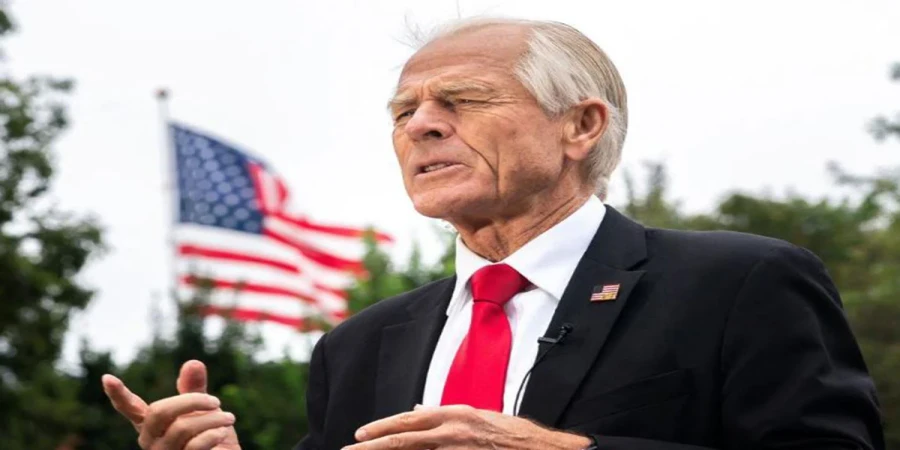
Peter Navarro, a senior trade adviser to former U.S. President Donald Trump and one of his most outspoken policy voices, has once again targeted Indian Prime Minister Narendra Modi with a barrage of critical remarks. In a fiery interview on Fox News, Navarro accused Modi of aligning too closely with Russian President Vladimir Putin and Chinese President Xi Jinping, while questioning the broader direction of India’s global strategy.
Navarro, who is known for his blunt style and hawkish views on trade and geopolitics, acknowledged Modi’s leadership qualities but expressed deep skepticism about the Indian prime minister’s partnerships on the world stage. “Modi is a good leader,” Navarro said during the interview. “But I fail to understand why the leader of the world’s largest democracy is shaking hands with Putin and Xi Jinping. This raises serious questions about India’s commitment to democratic values in the global order.”
The remarks have reignited debate in both Washington and New Delhi, highlighting the fragile balance India must strike as it navigates ties with major powers. Navarro’s choice of words was particularly striking because it carried an undertone of both criticism and disappointment, a sentiment echoed by parts of the U.S. political establishment that remain wary of India’s strategic autonomy in global affairs.
Navarro went further, directly addressing Indian citizens during the broadcast. “To the people of India, I would simply say: pay attention to what is happening. These developments are not in your best interests. The Brahmins are profiting at your expense, and it needs to stop.” His controversial phrasing has already sparked reactions, not only for its geopolitical implications but also for invoking sensitive cultural references that could be interpreted as divisive.
This is not the first time Navarro has directed his fire at India’s energy and trade policies. In recent months, he has repeatedly criticized New Delhi’s purchase of Russian crude oil, arguing that such transactions undermine global efforts to isolate Moscow economically over its ongoing war in Ukraine. Navarro has described these purchases as a form of indirect support for Russia’s military campaign, a position that aligns with Washington’s broader efforts to discourage international partners from trading with Moscow.
Just last week, Navarro appeared on Bloomberg TV, where he described the Russia-Ukraine conflict as “Modi’s war.” His framing suggested that by continuing to buy Russian oil and maintaining commercial ties, India was playing a role in prolonging the conflict. That remark drew sharp reactions from Indian analysts, who defended New Delhi’s policy of energy security and strategic independence.
The United States, under the Trump administration, had already imposed punitive measures on India over its trade with Russia. Washington placed a total of 50 percent tariffs on certain Indian imports, which included an additional 25 percent surcharge explicitly linked to India’s purchases of Russian crude. The Trump camp maintained that such penalties were necessary to signal disapproval and to prevent Moscow from gaining economic lifelines in the midst of sanctions.
Navarro’s comments also shed light on the broader ideological divide between the Trump camp and India’s foreign policy. Trump himself has often projected warmth toward Modi, emphasizing personal friendship and lauding India as a vital partner. Yet behind the rhetoric, his advisers have repeatedly expressed frustration with India’s trade practices and its reluctance to fully align with the United States on issues involving Russia and China.
India, for its part, has consistently defended its policy of strategic autonomy, asserting that its decisions are guided by national interest rather than external pressure. New Delhi has maintained that purchasing oil from Russia is crucial to meeting the energy needs of its massive population, especially at affordable rates. Indian officials also point out that Europe continues to import Russian energy in significant volumes, making Washington’s criticism appear selective.
Navarro’s latest remarks, however, underscore a narrative that has gained traction in certain U.S. policy circles—that India cannot continue to position itself as a democratic counterweight to China while simultaneously deepening economic links with Russia and keeping lines open with Beijing. For Navarro, this contradiction represents a failure of leadership, one that could have lasting consequences for India’s global standing.
Reactions within India to Navarro’s Fox News interview have been mixed. While critics dismissed his comments as inflammatory and driven by U.S. electoral politics, others cautioned that such views reflect real frustrations among policymakers in Washington. The reference to Brahmins in particular was met with disapproval, with commentators noting that reducing India’s complex social and political dynamics to a single community was both inaccurate and provocative.
Observers also note that Navarro’s tone mirrors Trump’s “America First” doctrine, which has often taken a confrontational approach toward allies and partners. In this framework, any country that deviates from Washington’s line on major global issues is likely to face verbal or economic pressure. Navarro’s words therefore not only reflect his personal stance but also provide insight into how a potential Trump return to the White House could reshape U.S.-India relations.
For now, New Delhi appears unlikely to shift its position dramatically. Indian policymakers have consistently emphasized the need to maintain diverse partnerships, balancing relationships with the United States, Russia, and China while pursuing their own developmental and security interests. Still, the fact that such high-profile figures continue to attack Modi publicly underscores the challenges India faces in maintaining that balance without straining ties with Washington.
As the world watches the unfolding geopolitical realignment driven by the war in Ukraine, Navarro’s comments serve as a reminder of how closely India’s decisions are being scrutinized. Whether or not his remarks alter the trajectory of U.S.-India relations, they have certainly reignited debate about the costs and consequences of India’s partnerships in an increasingly polarized global environment.
reporter