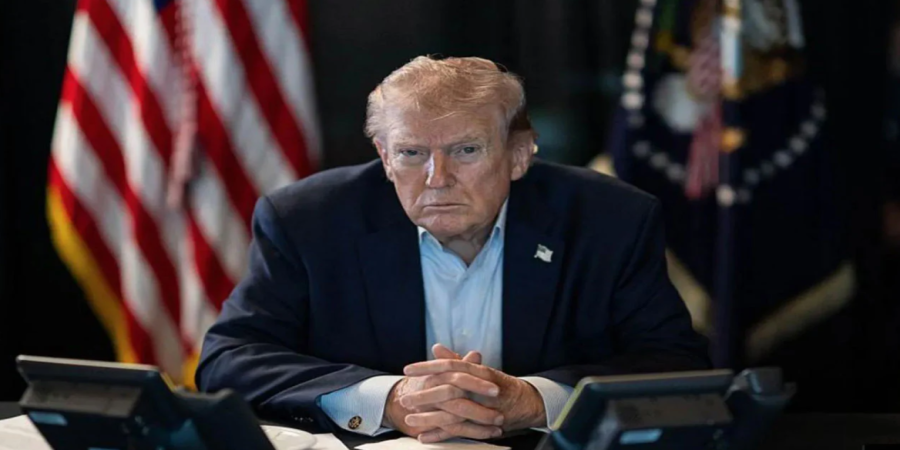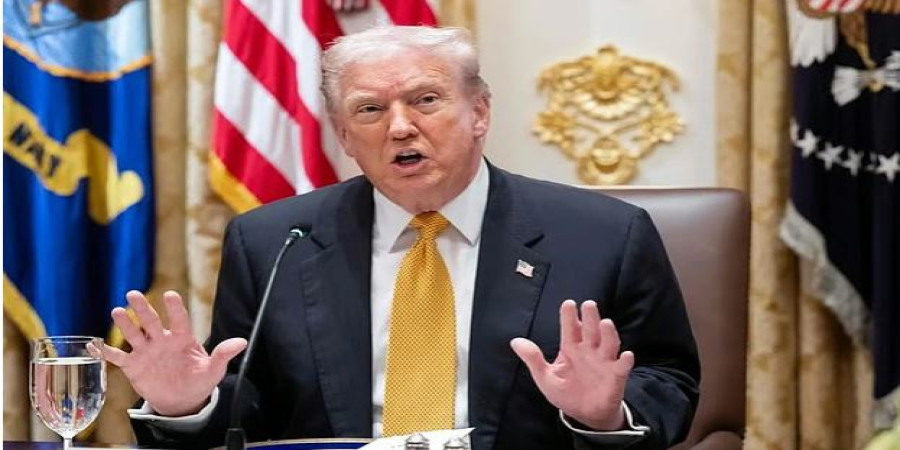
ছবি: যুক্তরাষ্ট্রের প্রেসিডেন্ট ডোনাল্ড ট্রাম্প
U.S. President Donald Trump’s administration has intensified military activity around Venezuela over the past two months. Under the banner of a “war on narco-terrorism,” U.S. forces have carried out lethal strikes on civilian vessels in the region. More than 80 people have been killed in these preemptive attacks, which target anyone suspected of involvement in drug trafficking along the Latin American coast.
At the same time, hard-line advisers are urging Washington to expand military operations even further to push Venezuelan President Nicolás Maduro from power.
‘States also produce terror’—scholars note
In his award-winning book Terror and Territory, geographer Stuart Elden argues that terrorism cannot be understood only as a characteristic of nonstate groups. States, too, often act in ways designed to instill fear.
A wide body of research backs this view. Scholars from Brown University’s Costs of War project estimate that between 2001 and 2023,
-
U.S.-led “War on Terror” operations caused over 400,000 direct civilian deaths,
-
and when indirect deaths are included—such as those caused by the collapse of water or medical infrastructure—the total reaches 3.5 million.
A recent study published in The Lancet found that U.S. economic sanctions imposed during 2010–2021 caused about 500,000 additional deaths per year worldwide.
Efforts to bypass oversight
Analysts say one of the Trump administration’s central strategies has been expanding presidential power while weakening judicial oversight. This approach grants the White House near-unrestricted authority to authorize military force with minimal external review.
A court case linked to Trump’s attempt to deploy federal troops to quell protests in Chicago illustrates this pattern. Lower-court judges blocked the deployment because the administration failed to show that a “rebellion,” as defined by law, was actually taking place. Yet government lawyers argued that the president alone has the authority to decide what qualifies as a rebellion, effectively nullifying statutory limits on domestic military use.
The same logic applied abroad
Experts warn that the same legal reasoning is now being invoked to justify U.S. military actions near Venezuela. By claiming exclusive power to define who is a “terrorist,” the administration gains broad freedom to conduct lethal operations without meaningful oversight.
Drug-war justification contradicts evidence
Trump has publicly argued that drug traffickers should be treated as terrorists because they “kill Americans.” But U.S. overdose deaths are overwhelmingly driven by fentanyl, a synthetic opioid not produced in Venezuela.
Moreover, officials have not provided evidence that the vessels destroyed in recent strikes were actually carrying drugs. Nor has the administration explained how blowing up small boats in Caribbean waters would meaningfully affect the U.S. drug crisis.
A warning from observers
Legal scholars say these developments signal a deeper attempt to erase constraints on presidential war-making, both at home and abroad. The concern is that the decades-long “War on Terror”—already responsible for millions of deaths—may be returning in a more opaque and less accountable form.
For years, civilians around the world have paid the highest price for counterterrorism campaigns—whether through bombings, destroyed infrastructure, or crippling sanctions. Analysts warn that President Trump is now reviving that same model, this time targeting the waters and coastline of Venezuela.
reporter