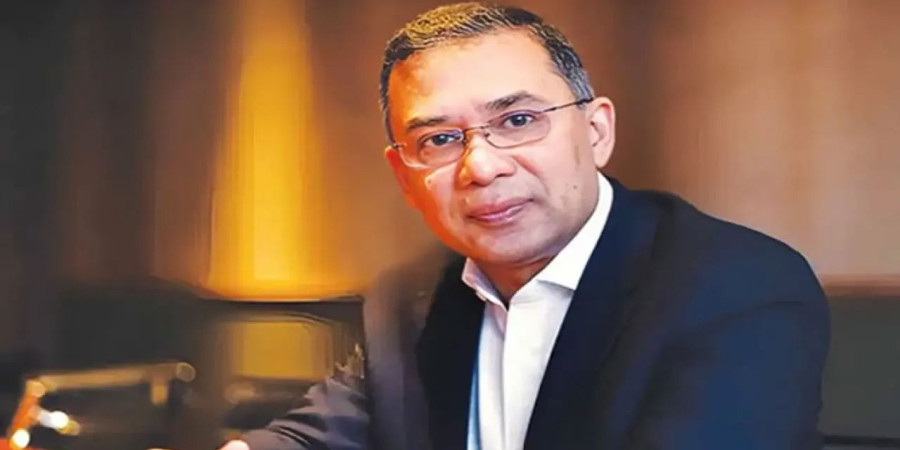
ছবি: Photo: Collected
On the anniversary of the historic July-August uprising, BNP Acting Chairman Tarique Rahman addressed the nation through a powerful Facebook post on Tuesday, August 5. Marking one year since the fall of what he termed the “fascist regime” of Sheikh Hasina, Rahman reaffirmed his vision of a free, inclusive, and democratic Bangladesh—"a Bangladesh seen through a mother’s eyes" where every citizen, regardless of belief, background, or identity, feels secure and valued.
Calling the events of 2024 a “war to protect independence,” in contrast to the 1971 war for its attainment, Tarique Rahman drew a poignant parallel between the two chapters of Bangladesh’s struggle. He said the people of Bangladesh had not forgotten the martyrs of 1971, and likewise, would not forget those who sacrificed their lives in the July uprising of 2024.
He envisioned every future August 5 as a national day of commitment to democratic governance and human dignity. The interim government has already declared it as “July Uprising Day,” a national holiday commemorating the popular revolution that ousted the Hasina administration. According to Rahman, the day symbolizes freedom from tyranny and servitude, offering the nation an opportunity to renew its pledge to democratic principles.
Reflecting on the years of repression, he described the fallen regime as one that normalized enforced disappearances, killings, abductions, and relentless persecution. He accused the former government of turning the country into a living nightmare for pro-democracy activists from across the political spectrum. Hundreds of thousands were displaced or forced into exile by politically motivated false cases, and many families were permanently fractured.
Rahman spoke of “Ainaghars”—secret detention centers allegedly used by the previous regime to silence dissent. He claimed that victims were held in darkness for years, some never to be seen again. He referenced the long-missing BNP leaders like former MP Ilias Ali and Commissioner Chowdhury Alam as haunting reminders of these abuses.
According to him, the regime’s grip extended to every constitutional institution. The judiciary and the Election Commission were rendered ineffective, he said, and electoral rights were stripped from the people, reducing the electoral process to a farce. He also criticized the destruction of the education system, replaced by a culture of political violence.
The economic picture painted by Rahman was equally grim. He alleged that the country’s banking system was looted, with more than 28 trillion BDT siphoned out of the country. He condemned the rise of "personal rule" marked by corruption and unchecked power.
Despite these challenges, Rahman emphasized that the fascist government ultimately could not hold on. He credited the revolution to a nationwide alliance of students, workers, intellectuals, professionals, mothers, and even children, who collectively rose in defiance. He recounted how armed forces were deployed to suppress the protestors, including the use of helicopters to fire on crowds, leading to mass casualties.
Rahman stated that over 1,500 people were martyred during the uprising, with at least 30,000 injured—many left permanently disabled or blind. He named several victims, including Abu Sayeed, Wasim, and child protestor Mugdho, as symbols of the people’s resilience and courage.
He stressed that just as the nation honors its 1971 martyrs, it must also honor the martyrs of the 2024 uprising. Rebuilding the country on the ideals of equality, justice, and humanity would be the only true repayment of the debt owed to them. He urged the people to support the interim government in establishing a truly democratic order—one where power originates from the people and remains accountable to them.
In his address, Rahman dismissed any comparison between the interim government and the fallen regime, warning against attempts to justify fascism under the guise of critiquing the new order. He described the collapse of the previous administration on August 5, 2024, as unprecedented in global history—an event where the entire power structure disintegrated and fled, from the Prime Minister to the Chief Justice to religious leaders.
He expressed concern that, even in exile, the former autocrats show no remorse for the bloodshed they oversaw. Nonetheless, he celebrated the rise of a unique national unity against fascism and declared confidently that such authoritarianism would never return to Bangladesh. The spirit of resistance, he insisted, remains alive and unshaken.
Calling for political tolerance and nonviolence, Rahman urged citizens not to resort to mob justice or take the law into their own hands. He reminded the people that the true strength of a democracy lies in debate, pluralism, and accountability—not in revenge or vigilantism.
He concluded by reaffirming his party’s commitment to democratic principles and urged all political forces to seek legitimacy through the people’s mandate. Only when the people are empowered to choose their representatives—from local bodies to the national parliament—can a democratic state be truly realized. Without empowering the people, he warned, no institution can be truly strong or enduring.
reporter