ছবি: -Collected Photo
The National Board of Revenue (NBR) has suspended four more tax officials on charges of obstructing official duties during the recent protests within the agency. The Internal Resources Division (IRD) issued the suspension orders on Monday. According to the directive, IRD Secretary and NBR Chairman Abdur Rahman signed separate orders against the four officials, placing them under temporary suspension as disciplinary measures.
The decision comes as part of a wider move to maintain administrative control within the country’s key revenue authority, which has been facing disruptions due to protests and work stoppages by a section of its employees. Officials confirmed that the suspensions are effective immediately and will remain in force until further notice.
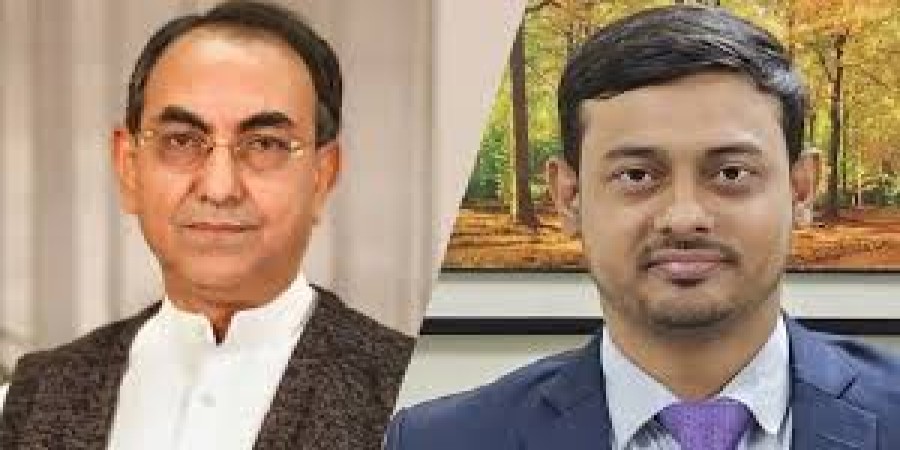
While the NBR faces turbulence, political discussions on the upcoming national election continue to gain momentum. Senior BNP leader Salahuddin Ahmed, a member of the party’s Standing Committee, said on Tuesday that his party has no doubts about the timing of the national polls. He expressed confidence that the election would be held in February next year as scheduled.
Speaking to journalists at his residence in Gulshan, Ahmed said the caretaker government’s chief adviser has already sent a formal letter to the Election Commission (EC), and the EC itself is nearly done with its preparations. “BNP has no uncertainty regarding the election,” he said, dismissing speculation about potential delays.
He further commented that those publicly questioning the election schedule are doing so for strategic purposes rather than out of genuine concern. “There is nothing more to say about their remarks,” he added.
Turning to the July Charter proposed by the National Consensus Commission, Salahuddin Ahmed explained that of the 84 points included, many have already gained consensus among all political parties. However, differences remain on around 15 issues, with BNP registering dissent on 10 of them.
On constitutional matters, the BNP leader observed that while some recommendations in the charter could be implemented through ordinances or executive orders, other points that require constitutional amendments must be addressed by an elected parliament within the first two years of its tenure. “The earlier draft had such a commitment, but the new draft does not include it,” he noted.
He also criticized the notion of elevating the July Charter above the constitution, arguing that no document can be superior to the country’s supreme law. “If such precedence is given, it will create a negative precedent for the future,” he cautioned. Ahmed added that the previous draft had clearly stated that the charter would be implemented within two years of parliamentary elections, but the latest version excludes that timeframe. He also questioned the stipulation in the draft that the charter itself cannot be challenged, saying it was an inappropriate clause.
Despite disagreements, Salahuddin Ahmed indicated that BNP is open to compromise on certain matters. He mentioned that the party could show flexibility regarding issues such as the proportional representation system in the upper house of parliament and the formation of a caretaker government. He suggested that two or three such issues might be resolved through negotiation.
The BNP leader announced that his party will officially submit its views on the July Charter to the National Consensus Commission on August 20. The party is also expected to take part formally in the commission’s discussions starting August 25.
In his remarks, Ahmed emphasized that while there are inconsistencies in the current draft of the July Charter, such challenges can be resolved through dialogue. He reiterated that BNP intends to engage in discussions to work out mutually acceptable solutions.
The developments reflect two parallel currents shaping Bangladesh’s present political and administrative climate: the NBR’s ongoing disciplinary actions amid unrest in the civil service, and the broader political debates over the upcoming national election and constitutional reforms. With suspensions within the revenue authority aimed at ensuring stability in governance, and BNP expressing confidence in electoral timelines while navigating complex debates around the July Charter, the coming months are expected to be marked by both administrative discipline and heightened political negotiation.
reporter