ছবি: Photo: Collected
In a landmark moment for Bangladesh’s political history, Professor Dr. Muhammad Yunus, the Interim Chief Advisor, formally read the “July Proclamation” on Tuesday, August 5, at a mass gathering on Manik Mia Avenue in Dhaka. This declaration not only outlined the roadmap for sweeping political and administrative reforms but also bestowed the title of "National Hero" upon the martyrs of the recent student-led uprising.
The event marked the first anniversary of the dramatic ousting of former Prime Minister Sheikh Hasina’s government. Addressing the nation and a crowd of supporters, Dr. Yunus recalled the chain of events that led to the collapse of what he described as an "illegitimate and fascist regime." According to the proclamation, it was a call to action from the anti-discrimination student movement that sparked a nationwide non-cooperation campaign. This civil resistance gained momentum, ultimately culminating in a decisive long march to Dhaka on August 5, 2024.
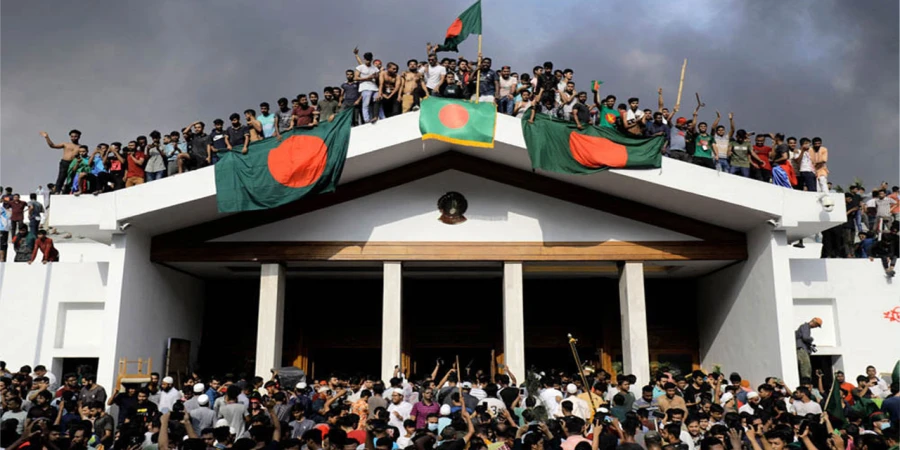
Dr. Yunus detailed how a coalition of opposition parties, students, professionals, and general citizens stood united in their fight against authoritarianism. Their efforts reached a climax when a massive crowd marched toward the official residence of the Prime Minister, pressuring Sheikh Hasina to resign and flee the country. The people’s uprising, which began as a student-led protest, turned into a full-fledged nationwide rebellion, resulting in the eventual toppling of the regime.
During his speech, Dr. Yunus solemnly declared that all those who lost their lives in the July uprising would henceforth be recognized as national heroes of Bangladesh. This recognition, he said, was not merely symbolic but would come with full legal protection and state support for the families of the deceased, the injured fighters, and the broader community of protestors who had risked their lives to restore democracy.
The July Proclamation aims to set the foundation for a new Bangladesh—free from the grip of one-party rule and political repression. In it, the interim government vowed to uphold justice, dismantle fascist structures, and ensure that the voices of the country’s youth and general public are permanently embedded in its political architecture. The proclamation is also seen as an answer to the growing demand for transparency, accountability, and inclusion from all corners of society.
Dr. Yunus described the July uprising as a pivotal chapter in the country’s democratic evolution, comparable in spirit and sacrifice to the Liberation War of 1971. He emphasized that the people's collective struggle and sacrifice would now be acknowledged in the national narrative, beginning with the official recognition of the fallen protestors as national heroes.
At the conclusion of the event, Dr. Yunus underscored that the proclamation was not just a reflection of the interim government’s vision but a faithful representation of the people's will. “This document,” he said, “is born from the triumph of the people on August 5, 2024. It is their voice, their demand, and their roadmap for a future Bangladesh that belongs to all its citizens—not just the ruling elite.”
The announcement was met with chants, tears, and applause from thousands in attendance, many of whom had actively participated in the protests. For the grieving families of the victims, the proclamation was a moment of solace and dignity. For the broader public, it marked the beginning of a new political chapter—one shaped by sacrifice, solidarity, and the hope of a just and democratic Bangladesh.
reporter