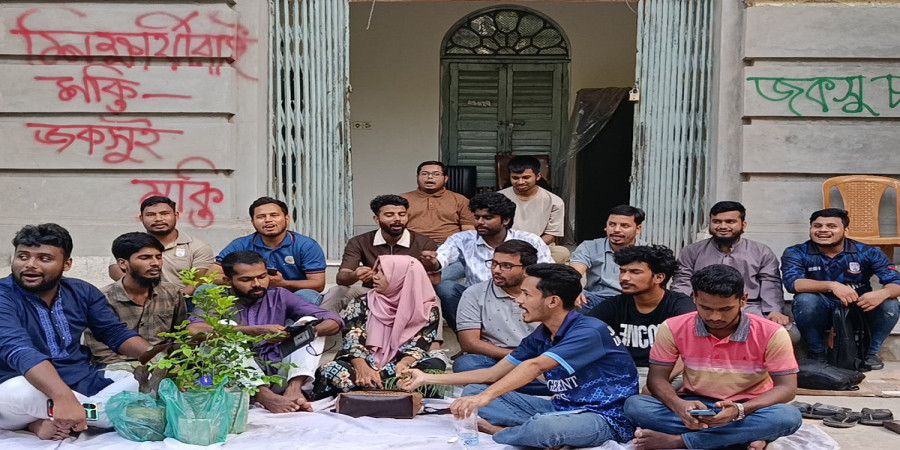
ছবি: -Collected Photo
For the fifth consecutive day, students of Jagannath University have continued their sit-in protest, demanding supplementary scholarships, a clear policy framework for the Jagannath University Central Students’ Union (JnUSU), and a concrete roadmap from the administration. The demonstrators have warned that if their demands are not met, they will escalate their movement with tougher programs.
On Tuesday afternoon, from around 1:30 pm until the time of reporting, groups of students were seen staging the sit-in in front of the university’s administrative building. Leaders and activists from different student organizations across the campus joined the demonstration, underscoring the growing momentum of the movement.
Throughout the program, the protesting students voiced their anger and frustration through chants aimed at the administration. Slogans such as “From eight to eight, whose bell is ringing,” “Vice Chancellor, are you listening, we are sitting here,” and “Stop making excuses, tell us when it will happen” echoed across the premises. Other chants called for action against what students described as administrative indifference, while rallying cries like “JnUSU is our right, no one can suppress it” and “Scholarship is our right, you cannot deny it” highlighted the central focus of their demands. They also emphasized broader issues of representation, student rights, and welfare with slogans like “Housing and scholarships must be provided,” “Fearless Jagannath students will win this battle,” and “Light the fire against injustice.”
Leaders of the movement said their position was clear: they would not back down until the administration provided an unambiguous explanation and action plan on the scholarship issue and a transparent policy roadmap for the revival of JnUSU.
Speaking to reporters during the sit-in, Faisal Murad, convener of the Bangladesh Democratic Students’ Union, Jagannath University unit, said that the university syndicate’s decision would play a key role in shaping the next phase of their agitation. “The syndicate is only one step in drafting the JnUSU constitution. Once we know the outcome of its decision, we will declare our next program. But until there is a clear statement on supplementary scholarships, this movement will not stop,” Murad stated.
Echoing this stance, AKM Rakib, president of the Jagannath University unit of the Student Rights Council, noted that the current sit-in would continue as planned while students awaited the administration’s response. “We have learned that the administration has called a syndicate meeting. Our next course of action will depend on what comes out of that meeting. If no positive decision is made, we will be compelled to announce tougher programs,” he warned.
The prolonged protest has drawn attention not only within the university but also beyond, as student groups argue that the administration has long delayed fulfilling promises tied to student welfare and democratic representation. The demand for supplementary scholarships stems from concerns about affordability and inclusivity in higher education, with many students struggling to cope with rising costs without adequate institutional support. The call for a JnUSU policy, meanwhile, reflects students’ desire for a recognized and democratic platform to voice their collective concerns.
The slogans heard during the sit-in highlight a combination of frustration and determination, with students signaling that they will not accept further delays or vague commitments from the authorities. The fiery atmosphere also reflects a sense of unity among diverse student organizations, all of whom appear aligned in demanding accountability from the university administration.
Observers suggest that the Jagannath University protests resonate with broader issues facing higher education in Bangladesh, where students frequently express dissatisfaction with governance, representation, and financial support mechanisms. The insistence on a transparent roadmap for JnUSU is particularly significant, as it connects student demands to the broader call for democratic participation within university structures.
As the sit-in enters its sixth day, much depends on the outcome of the syndicate meeting. If the administration responds with concrete measures, the situation may calm down. But if students find the response inadequate, the campus could witness a new wave of intensified agitation, potentially disrupting regular academic and administrative activities.
For now, the protesters remain steadfast, their chants reverberating across the campus as they press for recognition of their rights and a commitment to change. The unfolding situation at Jagannath University reflects a moment of growing student activism, with young voices demanding not just promises but tangible action in the pursuit of their academic and democratic rights.
reporter