ছবি: -Collected Photo
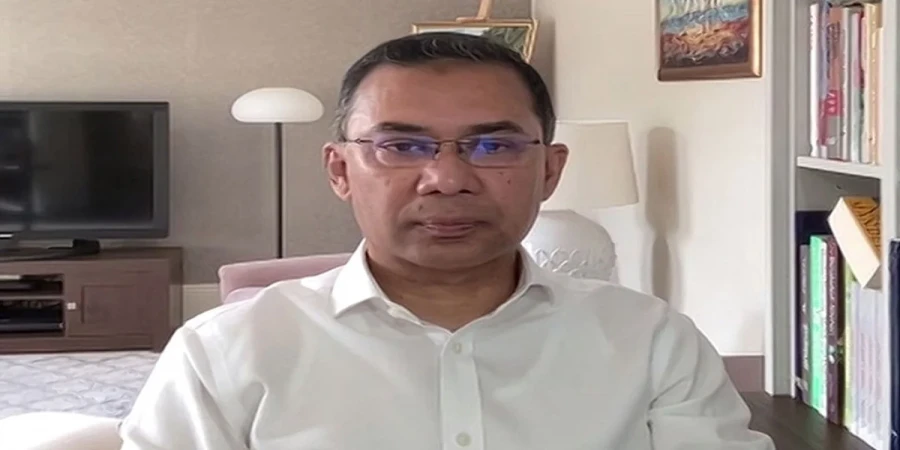
BNP’s Acting Chairman Tarique Rahman has reiterated that there is no alternative to elections in establishing democracy, fundamental rights, and an accountable state in Bangladesh. Addressing a discussion virtually from abroad, he argued that only through the protection of people’s right to vote can the country safeguard freedom of expression, prevent authoritarian revival, and strengthen national ownership of governance.
On Sunday afternoon, Rahman joined a views-exchange meeting organized by the National Poetry Council at the National Press Club in Dhaka. The event, titled “The Role and Responsibility of Writers and Poets in the Advancement of Democracy”, brought together cultural figures and intellectuals. Speaking to the audience virtually, Rahman outlined his concerns about the current political climate in Bangladesh and expressed his party’s commitment to resisting authoritarianism while working toward democratic accountability.
Rahman emphasized that Bangladesh must remain vigilant to ensure that no form of extremism or religious fundamentalism finds shelter in the country. According to him, Bangladesh’s political future depends not on narrow ideological alignments but on collective efforts to protect democracy and uphold the right of citizens to freely exercise their franchise.
He stated, “The people of Bangladesh have once stood against dictatorship and removed it from power. It is now our responsibility to ensure that authoritarian forces cannot stage a comeback. Our ideological positions may differ, but that must not become an obstacle to standing together for the greater cause of democracy.”
The BNP leader drew attention to the importance of national unity, asserting that all citizens, regardless of political beliefs, should unite to ensure a fair electoral process. He argued that the legitimacy of state power derives solely from the citizens of the country and that this principle can only be preserved through credible elections.
Rahman stressed, “If we truly want to establish the ownership of this nation in the hands of its citizens, then we must protect voting rights, we must defend democracy, and we must guarantee freedom of speech. This requires an electoral system that is free, fair, and inclusive.”
Throughout his address, Rahman reiterated BNP’s stance that accountability in governance cannot be created without the will of the people being reflected through transparent elections. He added that the present crisis of governance and accountability in Bangladesh stems from the denial of people’s voting rights and the absence of a functioning democratic process.
Calling for greater activism, he urged citizens, political parties, civil society members, and intellectuals to take a collective stand in favor of free elections. “This is not only a political matter,” Rahman noted, “but also a moral responsibility toward future generations. Without accountability, no nation can progress in a sustainable way.”
Rahman also issued a warning against complacency, reminding his audience that the erosion of democratic practices can open the door to authoritarian consolidation. He described the current situation as one that requires vigilance, courage, and unity. “The lessons of history remind us that democracy is not a gift; it must be defended and nurtured by the people themselves,” he said.
At the same time, Rahman rejected the notion that differences in ideology should prevent national consensus on democracy. He argued that democracy provides a platform where diverse viewpoints can coexist, while authoritarianism seeks to silence dissent. Therefore, defending democracy is a shared responsibility that transcends partisan boundaries.
BNP’s acting chairman also reiterated his party’s commitment to preventing the misuse of religion or extremist ideologies in politics. He explained that BNP envisions a Bangladesh where democratic institutions remain strong enough to prevent any form of radicalization. “Our expectation is that Bangladesh will never turn into a sanctuary for extremism or fundamentalism. For that, every citizen must remain vocal and proactive,” he added.
In his speech, Rahman repeatedly returned to the theme of accountability, underscoring that a state without accountability cannot serve its citizens. He pointed out that genuine accountability is only possible when governments are chosen by the people through free elections and remain answerable to them. According to him, an unelected regime cannot represent the will of the people and therefore lacks the foundation for establishing accountability.
“Ensuring accountability is not optional; it is essential. And it can only be achieved through protecting the people’s right to vote,” Rahman concluded.
The event at the National Press Club ended with calls from cultural personalities for writers, poets, and intellectuals to continue raising their voices in defense of democracy. Speakers highlighted the responsibility of Bangladesh’s cultural community to keep the spirit of democracy alive through literature, art, and public discourse.
By the close of the meeting, it became clear that BNP’s central message, delivered through Rahman’s address, was a renewed push for unity and democratic reforms in Bangladesh. His remarks underscored that the struggle for democracy remains ongoing, and its success will depend on the collective will of the people to demand free elections and accountability from their leaders.
reporter