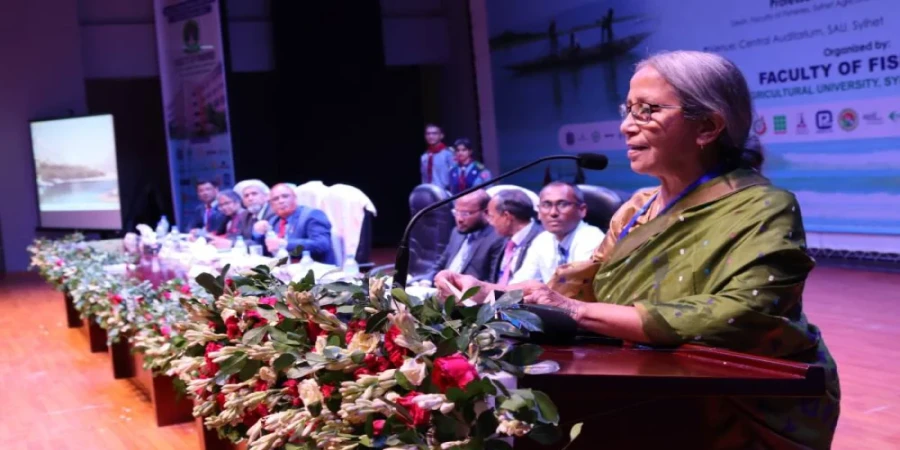
ছবি: -Collected Photo
Bangladesh’s national fish, the hilsa, is facing a growing threat due to shrinking river navigability, excessive harvesting, and increasing pollution, according to Fisheries and Livestock Adviser Farida Akhter. Speaking at the inauguration of the third International Conference organized by the Faculty of Fisheries at Sylhet Agricultural University on Friday, September 5, she urged greater national attention to safeguarding the country’s most iconic fish species.
“The hilsa holds a unique place in the cultural and economic fabric of Bangladesh,” Akhter remarked. “Unfortunately, its survival is at risk. Indiscriminate catching, coupled with river siltation and unchecked pollution, has severely endangered hilsa production. We must prioritize its protection before it is too late.”
The adviser highlighted that nearly 80 percent of Bangladesh’s wetlands, known as haors, are concentrated in the Sylhet region. These wetlands, she said, are not only a critical source of fish but also play an essential role in supporting livestock such as cattle and goats. Ensuring the sustainable development of haors, therefore, must be treated as a national priority.
Farida Akhter further emphasized the need to conserve local fish varieties, pointing out their direct contribution to food security and nutrition. “Our indigenous species form the backbone of dietary diversity,” she said, stressing the importance of encouraging safe and sustainable aquaculture practices that do not harm the ecological balance.
Calling haors “treasures of biodiversity,” she described them as living reservoirs of aquatic life. However, she cautioned that fish populations in these ecosystems are on a steady decline. “The haors are essentially mines of fish,” she explained. “Yet, year after year, the catch is falling. We must investigate the root causes of this decline and act immediately to restore the ecosystem’s balance.”
In her remarks, Akhter criticized destructive fishing methods such as the use of current nets and Chinese fishing nets, which she said contribute to the destruction of fish breeding cycles. “Those who use such methods cannot be considered genuine fishermen,” she declared. “These practices are not only illegal but also threaten the very future of fish production in our rivers and wetlands.”
The conference, which brought together fisheries experts, researchers, policymakers, and stakeholders from home and abroad, focused on challenges and opportunities in the fisheries sector, especially in relation to biodiversity conservation and food security.
Distinguished guests at the session included Professor Dr. A.T.M. Mahbub-E-Elahi, Treasurer of Sylhet Agricultural University; Dr. Md. Abdur Rauf, Director General of the Department of Fisheries; Dr. Anuradha Bhadra, Director General of the Bangladesh Fisheries Research Institute; and Ariful Haque Chowdhury, former Mayor of Sylhet City Corporation.
Speakers at the event echoed the adviser’s concerns, emphasizing that the fisheries sector, particularly hilsa production, is closely tied to the country’s cultural heritage and economic well-being. They noted that hilsa accounts for a significant share of Bangladesh’s fishery exports, making its conservation not just an environmental issue but also an economic imperative.
Experts also underscored the critical need for coordinated policies to address river pollution and improve navigability through dredging and better water management. Without such efforts, they warned, the livelihood of millions of fishermen could be at risk.
The conference highlighted that beyond hilsa, the decline of biodiversity in wetlands poses a serious threat to rural communities that depend on fish both as a source of income and a vital source of protein. Addressing this challenge, speakers said, requires long-term planning, research, and awareness campaigns targeting local communities.
Akhter concluded her remarks by urging collective action from policymakers, scientists, and local communities to protect aquatic resources. “If we cannot protect our rivers and wetlands, we risk losing not only the hilsa but also our ecological and nutritional security,” she said. “The responsibility lies with us all—to ensure sustainable practices, safeguard biodiversity, and protect the natural wealth entrusted to us.”
The three-day conference will continue with sessions exploring new research in fisheries science, the impact of climate change on aquatic ecosystems, and strategies for sustainable aquaculture development in Bangladesh.
reporter