ছবি: সংগৃহীত ছবি
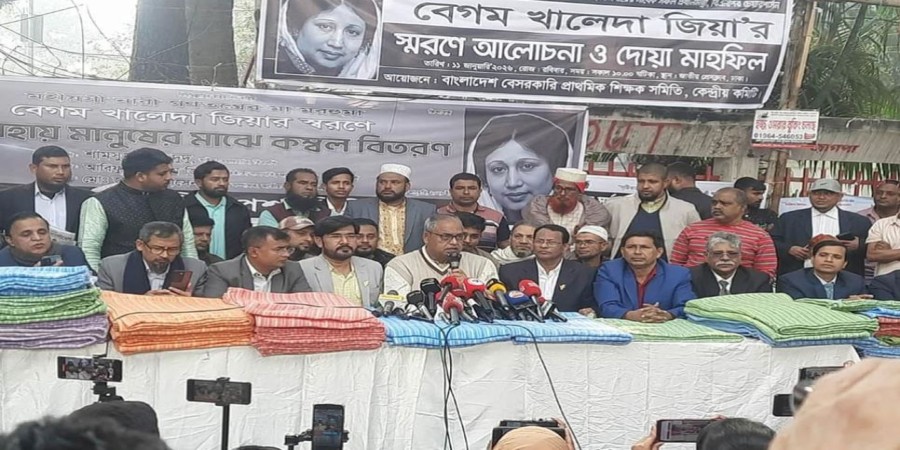
Ahead of Bangladesh’s upcoming national parliamentary elections, political tensions and debates have intensified, prompting senior BNP leaders to issue warnings about potential disruptions that could undermine the country’s long-standing democratic aspirations. Speaking at a program organized by the Nationalist Professionals Party in front of the National Press Club in Dhaka, BNP Vice Chairman Shamsuzzaman Dudu stated that any form of deviation, irregularity, or failure in the electoral process could severely impede democratic progress, weaken the foundations of sovereignty, and push the political landscape toward heightened uncertainty. He argued that geopolitical interests, diplomatic influence, and regional power dynamics have complicated Bangladesh’s electoral environment, with neighboring states paying close attention to the outcome and indirectly shaping narratives around the election. Dudu further emphasized that transparency, equal opportunity, and a genuine level playing field for political parties, candidates, and voters are essential for ensuring an internationally credible and domestically accepted election. Referring to parties that have close relations with the incumbent government, he noted that even they have raised concerns regarding fairness and electoral parity, indicating shifting political alignments and newfound pressures in the pre-election landscape. Beyond electoral fairness, Dudu highlighted domestic economic challenges, rising prices of essential goods, the burdens faced by farmers, laborers, and low-income groups, and growing dissatisfaction among citizens. With limited time left for corrective action, he questioned the government’s ability to mitigate economic hardship or deliver reforms that would ease public frustration before the polls. He added that a credible election requires a stable law-and-order environment, proper coordination among the military and security agencies, and visible transparency at the field level. Dudu cited recent incidents of violence as examples of emerging concerns and urged the government and the Election Commission to take preventive measures to ensure public confidence. Political analysts note that Bangladesh’s path toward democracy has historically oscillated between conflict, street agitation, state intervention, partisan polarization, and geopolitical pressure, making elections a focal point of national and international attention. As campaign momentum grows, the Election Commission, political parties, civil society, and external observers remain focused on both the electoral process and its eventual legitimacy. Scholars argue that the more credible an election appears, the stronger the legitimacy and policy stability of the future government becomes—affecting democratic continuity, economic decision-making, foreign policy priorities, and public trust. In the current context, political stakeholders face the responsibility of prioritizing dialogue, negotiation, and accountability over confrontation in order to secure democratic confidence and meet citizens’ expectations for a stable governance transition.
reporter