ছবি: Photo: Collected
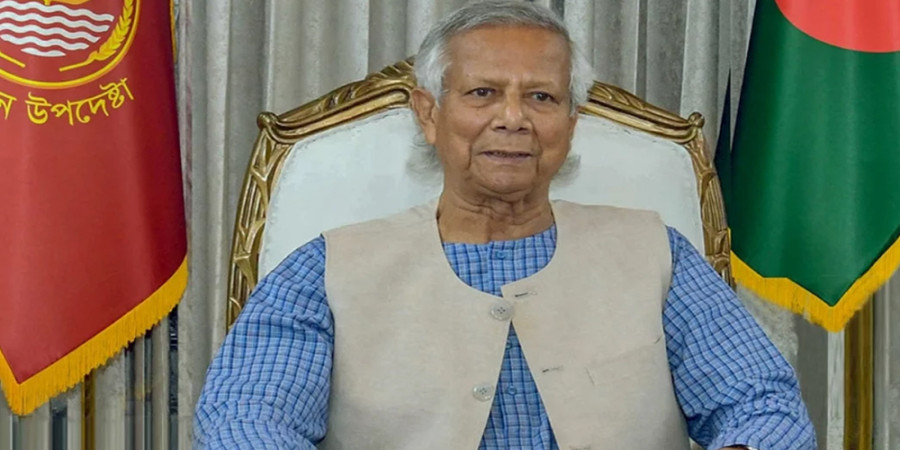
In response to the United States' abrupt decision to impose steep new tariffs on Bangladeshi products, Chief Advisor Professor Muhammad Yunus has convened an emergency meeting of the interim government. The session is scheduled for Saturday evening at 7:30 PM at the state guest house, Jamuna, where senior advisors, top economic experts, and key government officials are expected to attend.
This high-level meeting comes just days after U.S. President Donald Trump made a surprise announcement at a White House press briefing, held at 4 PM local time on Wednesday, April 2. There, he unveiled a sweeping new round of reciprocal tariff measures, raising import duties across the board on a number of trade partners—including Bangladesh.
According to the declaration, the import duty on Bangladeshi goods has surged to 37 percent, more than doubling the previous average rate of 15 percent. This dramatic increase is likely to deliver a sharp blow to the country’s export sector, particularly in the ready-made garment (RMG) industry, which forms the backbone of Bangladesh’s trade relationship with the United States.
Bangladesh exports goods worth approximately $8.4 billion to the U.S. annually, a substantial portion of which is composed of apparel products. Last year alone, RMG exports to the U.S. stood at $7.34 billion. With the imposition of such a steep tariff, stakeholders fear significant disruption, including possible order cancellations, declining competitiveness, and job losses within the garment sector.
Professor Yunus, who has consistently emphasized economic diplomacy and export-led growth, is expected to assess the broader implications of the tariff escalation and explore immediate policy responses. The meeting will likely center on strategic options to mitigate the impact, including bilateral dialogue with Washington, trade diversification, and fiscal support for affected industries.
The U.S. move is part of a broader protectionist shift that has reverberated across global markets. Many of America’s trading partners have expressed dismay over the sudden nature of the announcement, and several have indicated they may respond with their own countermeasures. In Bangladesh, the anxiety is particularly acute given the country’s heavy reliance on the apparel sector as a driver of employment and foreign exchange.
As tensions in global trade intensify, policymakers in Dhaka are bracing for further turbulence. Tonight’s emergency meeting is poised to play a critical role in shaping the country’s immediate course of action, as it navigates one of the most serious challenges to its trade outlook in recent years.
reporter