ছবি: -Collected Photo
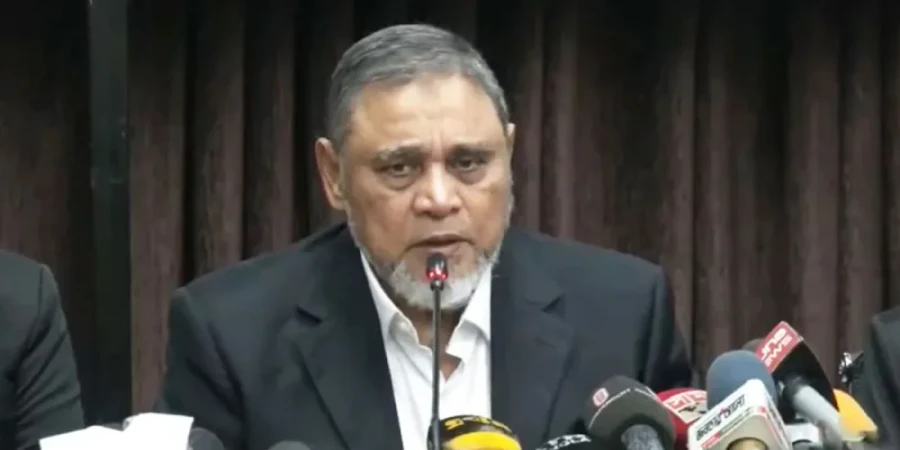
Chief Election Commissioner (CEC) A. M. M. Nasir Uddin has vowed to hold a transparent and credible national election, declaring that the Election Commission is working independently, without external influence, and determined to involve all stakeholders in the process. Speaking after a meeting with the United States’ Acting Ambassador to Dhaka, Traci Ann Jacobson, the CEC emphasized that the Commission is strengthening its preparations to deliver an election that will be regarded as fair and inclusive.
The remarks came on Monday afternoon at the Election Commission Secretariat in Agargaon, Dhaka. The meeting with Jacobson, who serves as the chargé d’affaires at the U.S. Embassy, was focused on understanding the Commission’s readiness in light of Bangladesh’s current political context. According to the CEC, the envoy wanted to gain a clearer view of how preparations were advancing in what he described as “a special situation under a special kind of government.”
Nasir Uddin explained that the Chief Adviser had previously communicated with the Commission, suggesting that elections take place before the month of Ramadan. That directive, he said, had accelerated the pace of preparations, though the groundwork had begun earlier. “We have intensified our readiness, that is true, but the process had already been underway,” he told reporters.
A key issue addressed by the CEC was the role of security forces during the election. He asserted that all law enforcement agencies, including intelligence bodies, would operate under the full control of the Election Commission during the polling period. “We have spoken to the security agencies and they assured us that they will support us in whichever way we require. Their cooperation will be aligned entirely with the Commission’s instructions,” he said.
The assurance comes amid heightened public interest in how security will be managed during the election. Political tensions, street demonstrations, and occasional violence have raised concerns among both domestic and international observers about whether the polls can be conducted smoothly. The CEC’s remarks appeared intended to reinforce confidence that the Commission will have full authority over security arrangements, ensuring that the environment remains peaceful on election day.
Nasir Uddin also fielded questions about a recent incident involving physical altercations between leaders of the Bangladesh Nationalist Party (BNP) and the Nationalist Congress Party (NCP) during a public hearing on the redrawing of parliamentary constituencies. The confrontation, which drew widespread media coverage, sparked debate about political discipline and the role of the Commission in handling disputes. In response, the CEC said that the Election Commission had already taken legal steps regarding the matter. “We have instructed the police to act. It is up to them to investigate and take action against whoever they find responsible,” he added.
The CEC’s reassurances follow months of speculation about the credibility of the upcoming election. Bangladesh has experienced polarized politics for decades, and elections have often been flashpoints for conflict and controversy. This time, under the supervision of a caretaker government headed by Chief Adviser Professor Muhammad Yunus, expectations are particularly high for a process that is both transparent and inclusive. The Commission’s repeated emphasis on independence reflects its attempt to assure both political parties and the international community that the vote will not be compromised.
Observers note that the involvement of foreign diplomats, particularly from the United States, reflects international concern over Bangladesh’s democratic process. Washington has consistently voiced its support for free and fair elections in the country, while also applying pressure when signs of irregularities or violence emerge. Jacobson’s visit to the Election Commission was interpreted as part of a broader effort to monitor developments closely and encourage adherence to international standards.
Within Bangladesh, political parties remain sharply divided. The ruling establishment stresses stability and continuity, while opposition groups demand greater guarantees for fairness and transparency. The Election Commission, caught in the middle, faces the challenge of maintaining credibility while managing the logistical complexities of a nationwide vote. From updating voter rolls to redrawing constituency boundaries, the tasks are immense, and each step is scrutinized by political actors.
The CEC’s remarks about security control and independence were therefore more than routine statements; they were also a signal to both domestic and international audiences that the Commission intends to stand firm against undue pressure. His insistence that law enforcement will act only under the Commission’s directives is seen as a direct attempt to ease concerns about possible misuse of state institutions.
Despite these assurances, questions remain. The recent scuffle between party representatives during the boundary hearing highlighted how volatile the political atmosphere has become. With high stakes for all parties, tensions are expected to rise further as the election date approaches. Ensuring discipline at political gatherings and maintaining neutrality among security forces will be critical to the credibility of the outcome.
For many citizens, the credibility of the Commission itself is also under the microscope. Bangladeshis have long expressed skepticism about whether elections are genuinely competitive or merely formalities shaped by powerful interests. This skepticism has fueled voter apathy in past polls. By emphasizing independence and cooperation with all stakeholders, the CEC appeared to be addressing this public distrust, attempting to reassure the electorate that their votes will matter.
The Commission’s task in the coming weeks is formidable. It must complete constituency demarcations, finalize electoral rolls, train thousands of polling officials, and coordinate security measures across the country. Each of these steps requires not only technical precision but also political sensitivity. The presence of international observers is also expected, adding another layer of scrutiny.
As the press conference concluded, Nasir Uddin reiterated his central message: the Commission is determined to conduct an election that reflects the will of the people. His words carried the weight of both promise and expectation. The path ahead is uncertain, but the pledge to organize a free and fair vote will remain under watchful eyes at home and abroad.
reporter