ছবি: -Collected Photo
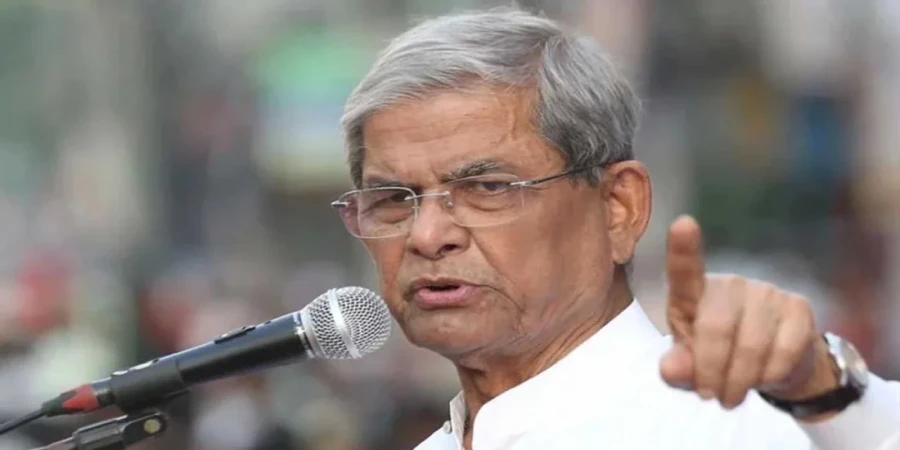
BNP Secretary General Mirza Fakhrul Islam Alamgir has asserted that the Bangladesh Nationalist Party (BNP) will never be allowed to turn into a party like the Awami League. He said the BNP’s politics must remain rooted in the ideals of party founder Ziaur Rahman, as mere slogans cannot sustain public support.
Speaking on Tuesday, September 2, at a gathering in Uttara, Dhaka, before a voluntary canal-cleaning initiative organized by BNP activists, Fakhrul stated that the people will not stand by the party if it becomes opportunistic or detached from its principles. “BNP must never become a party like the Awami League. If it does, the people will not love BNP either,” he declared.
Addressing the crowd, the BNP leader emphasized that the party would never compromise on issues of national independence and sovereignty. He added that BNP leaders and activists were committed to defending the country “to the last drop of blood” if necessary. Referring to Awami League president and former prime minister Sheikh Hasina, who has been abroad in recent months, Fakhrul said she was carrying out political activities from India. “If anyone dares to attack us, their hands will be broken,” he warned.
On broader political issues, Fakhrul dismissed speculation about Nobel laureate Dr. Muhammad Yunus having political ambitions. He said Dr. Yunus was not interested in entering politics but was instead working to restore peace in Bangladesh. He further claimed that BNP’s vision for the future includes creating a balance of power within the state structure to ensure accountability and democratic governance.
He reiterated the BNP’s respect for the rule of law, stressing that the party would uphold constitutional and legal processes if returned to power. He also assured that under a BNP government, the press and media would be allowed to operate with full independence and without restrictions.
Turning to BNP’s student wing and affiliated organizations, Fakhrul called for discipline and restraint in student politics. He urged members of the Jatiyatabadi Chhatra Dal and other student groups not to engage in violence or clashes during student union elections or elsewhere. “We must learn from past mistakes. The police also must play a responsible role in ensuring order,” he remarked.
The BNP secretary general also touched on the growing role of social media in Bangladesh’s political landscape. He urged leaders, activists, and supporters to remain vigilant against misinformation and rumors spread online, calling for unity in countering such campaigns. He stressed that false narratives on social platforms could destabilize the political environment if not addressed collectively.
In his remarks, Fakhrul once again criticized the ruling Awami League for, in his words, centralizing power and undermining democratic institutions during its tenure. He contrasted BNP’s vision of inclusive governance with what he described as the Awami League’s authoritarian practices.
Fakhrul’s comments come at a time of heightened political tension in Bangladesh, with ongoing legal proceedings against senior Awami League figures and growing calls from the opposition for reforms in the electoral process. His speech in Uttara appeared aimed not only at energizing BNP activists but also at reassuring the wider public of the party’s commitment to lawful and democratic politics.
Observers noted that the BNP leader’s message sought to differentiate his party sharply from the Awami League by focusing on principles, sovereignty, and respect for the rule of law. At the same time, his strong rhetoric reflected the intensity of Bangladesh’s political rivalry, which has shaped the nation’s governance and electoral dynamics for decades.
The BNP’s canal-cleaning program in Uttara, where Fakhrul made his remarks, was part of a wider initiative to mobilize volunteers and project the party as connected to grassroots issues. Party leaders described the effort as symbolic of BNP’s pledge to remain close to the people while also promoting civic responsibility.
The gathering concluded with calls for unity among activists and reaffirmations of loyalty to Ziaur Rahman’s political philosophy, which continues to serve as the ideological foundation of the BNP.
reporter