ছবি: Photo: Collected
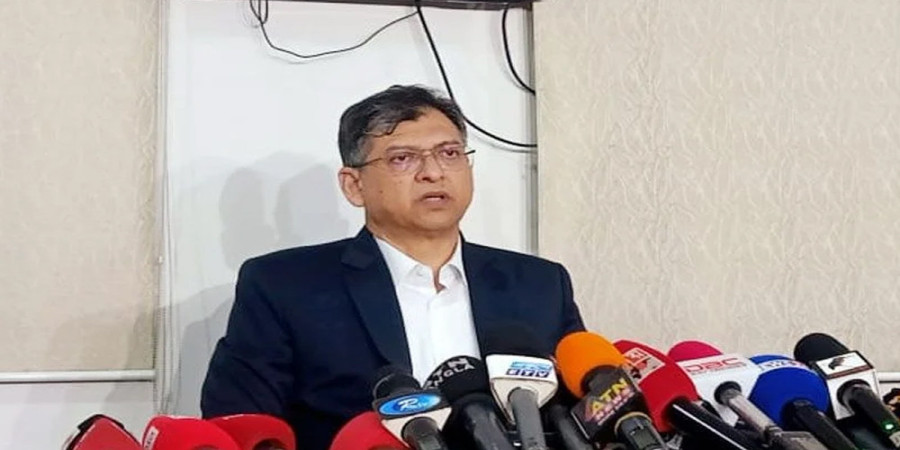
The Bangladesh Nationalist Party (BNP) has expressed agreement with the overwhelming majority of reform proposals put forth by the National Consensus Commission, with differences noted on only 51 out of a total of 826 suggestions. This was stated by Salahuddin Ahmed, a member of the BNP’s Standing Committee, during a press briefing on Friday following a courtesy meeting with the Director General of Darul Uloom Muinul Islam Madrasa in Hathazari, Chattogram.
Speaking to reporters, Salahuddin said the BNP was actively engaging in the process required to implement the proposals outlined in the July National Charter. “Out of 826 reform proposals, the BNP has differing views on only 51. The rest are acceptable to us,” he noted.
Addressing the upcoming national parliamentary elections, Salahuddin stated that the government has yet to make a clear declaration regarding the adoption of the Proportional Representation (PR) system. “We have not received any definitive statement from the government on whether the next general election will be held under the PR system,” he added.
He further elaborated on the development of the July National Charter, stating that a draft version had been shared with all political parties. “All parties received the draft of the July Charter, and the recommendations were generally accepted. These accepted proposals will be compiled to finalize the July National Charter,” Salahuddin said.
The National Consensus Commission, formed as part of a broader initiative to bring political stability and electoral reforms in Bangladesh, had submitted a comprehensive list of recommendations to facilitate dialogue and cooperation among political stakeholders. BNP’s willingness to agree to most of these suggestions is being seen as a positive move toward political consensus, though the points of disagreement are expected to remain subjects of further discussion and negotiation.
While the details of the 51 proposals that BNP disagrees with were not disclosed, political analysts suggest that these differences may relate to electoral mechanisms, governance structures, or transitional provisions ahead of the national polls. The BNP has consistently emphasized the need for a transparent and inclusive process for any proposed reforms, particularly in relation to electoral practices and institutional accountability.
As the political climate remains under scrutiny ahead of the next election cycle, the BNP’s conditional support for the Commission’s proposals signals both a willingness to engage and a cautious approach to critical reforms. The final form of the July National Charter is expected to be a key reference point in the lead-up to the national elections, shaping both political alliances and public discourse.
Salahuddin’s remarks in Chattogram underline the BNP’s continued involvement in national dialogue and its expectation that the government provide clarity on election procedures, particularly regarding any shift to a PR-based system. Whether the government will address this demand in the near term remains uncertain, but the broader political response to the July Charter will likely determine the trajectory of future reforms.
reporter