ছবি: -Collected Photo
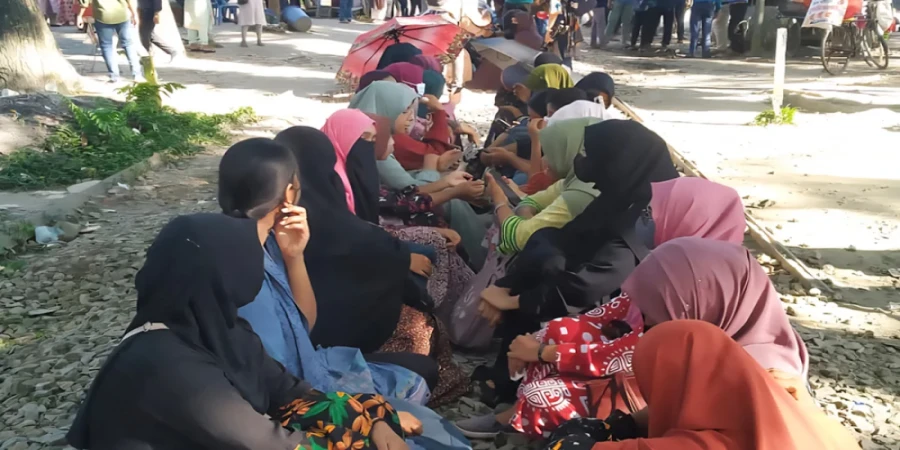
The Bangladesh Agricultural University (BAU) campus was once again at the center of unrest as students escalated their protest by blocking railway tracks, demanding justice and immediate action following a violent attack by outsiders. The move brought all train services along the crucial Dhaka–Mymensingh route to a standstill on Monday afternoon, amplifying the students’ frustration over what they described as the administration’s failure to protect them and ensure accountability.
The blockade began around 4:00 pm on September 1, when hundreds of students sat down in unison on the railway line near Abdul Jabbar Mor, a key junction adjacent to the university campus. Holding placards and chanting slogans, the students reiterated their six-point demand, which includes punishment for those involved in the attack, ensuring campus safety, and reversing the university administration’s decision to close down halls and suspend academic activities.
Students leading the protest said they had no choice but to intensify their movement. “Outsiders entered our campus and attacked our fellow students. Among the injured were journalists and female students. Yet instead of standing with us, the administration decided to shut down the university. This is unacceptable,” one protesting student declared to gathered reporters. The demonstrators vowed that their agitation would continue until their demands were fully met, insisting that the university authorities must take responsibility for the safety and dignity of their students.
The incident that triggered the unrest occurred on the evening of August 30. At approximately 7:45 pm, a group of outsiders reportedly stormed into the campus and carried out a brutal assault on students. Eyewitnesses described chaotic scenes, with students fleeing for safety as attackers indiscriminately targeted them. At least ten people were injured in the violence, including a journalist covering the event and several female students who were left traumatized. The attack was swiftly condemned by campus-based political and cultural organizations, including the BAU units of the Jatiyatabadi Chhatra Dal, Islami Chhatra Shibir, and the Socialist Students’ Front. Leaders of cultural groups also issued strong statements denouncing the violence and expressing solidarity with the victims.
However, the response of the university administration quickly became a flashpoint of contention. Instead of pursuing the perpetrators or strengthening security measures, the administration announced the closure of residential halls and suspension of classes until further notice. The decision, framed as a precautionary measure, was widely rejected by students who argued it amounted to punishing the victims rather than addressing the root cause of the violence. “We are the ones who were attacked, yet we are the ones being sent home. Why should we suffer for the administration’s inaction?” another protesting student asked during Monday’s demonstration.
The six-point demand issued by the students has not been officially published in detail, but sources close to the movement indicate that it includes: immediate identification and expulsion of those involved in the attack, legal action against the perpetrators, assurance of campus security, medical and financial support for the injured, withdrawal of the closure order, and an official apology from the administration for its perceived negligence.
The railway blockade brought significant disruption beyond the campus itself. The Dhaka–Mymensingh route is one of the busiest in the country, serving thousands of commuters daily. Trains were forced to remain stationary for hours, leaving passengers stranded and prompting frustration among travelers. Local businesses and transport operators also reported losses due to the disruption. Yet, for the protesting students, the inconvenience caused was a necessary step to make their voices heard. “We regret the suffering of ordinary people, but we have been left with no alternative. If our administration refuses to listen to us, we will make sure the whole country does,” a demonstrator explained.
Observers note that this is not the first time BAU students have taken to the streets or railways to press their demands. The university, one of the most prominent centers of agricultural education in South Asia, has witnessed repeated bouts of student activism over issues ranging from academic reforms to campus safety. In many cases, rail blockades have served as a potent form of protest, given the visibility and nationwide impact they generate.
The political undertones of the current unrest have also drawn attention. While the students insist that their movement is non-partisan and driven by concerns for their own safety, the involvement of various student wings of national political parties in expressing solidarity suggests that the issue may take on wider dimensions. Statements from opposition-linked student organizations have criticized not only the university administration but also hinted at broader failures of governance in ensuring safety on campuses across Bangladesh.
For now, the administration has refrained from making a detailed public comment on the protest. Officials have said they are “reviewing the situation” and urged students to return to dialogue rather than disrupt public life. However, given the intensity of Monday’s blockade and the determination expressed by the demonstrators, resolution appears unlikely without concrete action on the students’ six-point charter.
The violence of August 30 and the subsequent standoff have once again highlighted the fragility of campus security in Bangladesh’s public universities. Students, who form the backbone of the country’s intellectual and political culture, often find themselves vulnerable to external interference and political manipulation. The BAU protests underscore how quickly frustration can spill over into direct action, especially when young people feel their voices are being ignored.
As trains remained halted and students chanted for justice, the tension at Abdul Jabbar Mor symbolized more than just a dispute over an isolated incident. It reflected a deeper demand for accountability, security, and respect within academic spaces. Whether the university administration responds with meaningful measures or simply waits for the agitation to subside will determine not only the future of the BAU campus but also broader perceptions of student rights across the country.
reporter