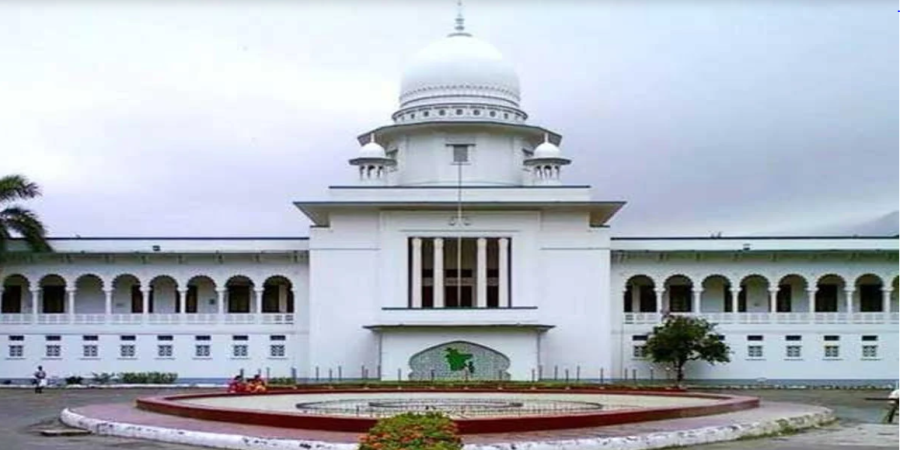
ছবি: ফাইল ছবি
A high-profile appeal related to alleged crimes against humanity has been officially listed in the court’s cause list, triggering renewed discussion within both political and legal circles, as the original tribunal ruling had delivered separate penalties—living imprisonment and capital punishment—against a former prime minister and former home minister based on charges associated with the political unrest during the July–August uprising period, prompting state prosecutors to file an appeal requesting harsher sentencing under eight legal arguments; the appeal’s placement as item number 58 in Thursday’s chamber court schedule indicates forward movement in judicial procedure and places the matter at a critical appellate stage, drawing attention from observers who anticipate broader legal scrutiny over evidence admission, procedural compliance, and statutory interpretation; following the initial tribunal verdict, the case generated significant reactions across domestic political parties, global human rights organizations, and legal scholars, many of whom noted that crimes against humanity trials often intersect with historical documentation, collective grievances, and constitutional mandates; further complicating the appellate trajectory, a former inspector general of police—convicted with a five-year sentence in connection to the same broader case—has also filed his own appeal, effectively placing multiple legal outcomes under review and expanding the case into a multi-layered appellate process; legal experts argue that appeals within superior courts enable reexamination of factual findings, judicial rationale, and admissibility questions, potentially altering the scope or impact of the original verdict, while political analysts caution that even without direct political commentary, the timing and visibility of such appellate actions can subtly influence public perception, legislative discourse, and electoral narratives; yet, in the midst of these interpretations, both government and opposition factions appear notably restrained in their public statements, recognizing that judicial matters are still pending and that premature assertions could disrupt legal norms; human rights advocates emphasize that crimes against humanity litigation tends to be globally complex, historically dense, and procedurally demanding, making extended appellate timelines neither unusual nor indicative of judicial delay; instead, they argue that thorough appellate scrutiny strengthens the legitimacy of final judgments in sensitive cases; looking forward, the appeal’s progression will hinge on court scheduling, presentation of legal arguments, and review of prosecutorial claims, all of which sustain considerable public interest while preserving judicial uncertainty until the hearing concludes and a definitive ruling is reached; as such, the listing of the appeal marks a significant phase shift for a case already embedded within national memory and political debate, and scholars anticipate that whatever the appellate outcome, it may set future reference points for jurisprudence, accountability mechanisms, and the adjudication of historical grievances within the country’s broader legal system.
reporter