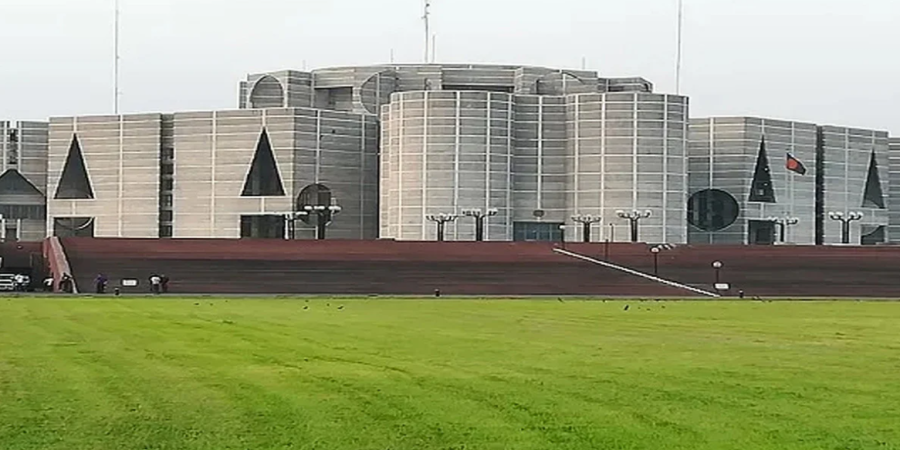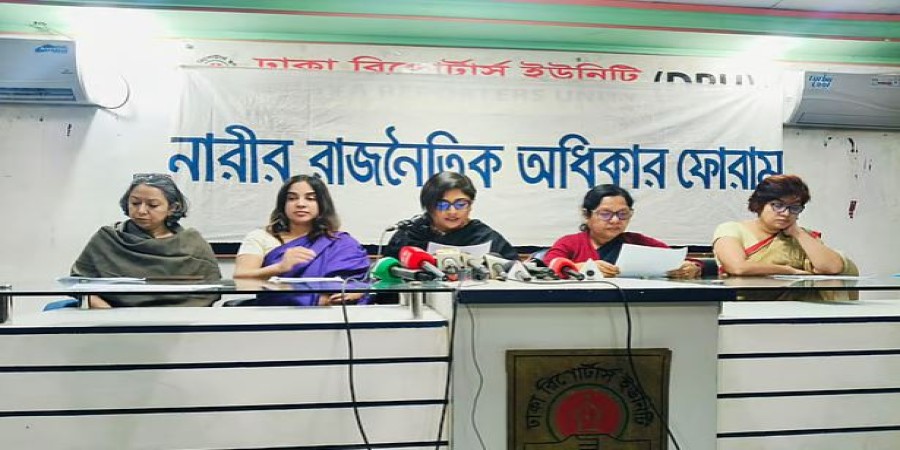
ছবি: নারীর রাাজনৈতিক অধিকার ফোরাম আয়োজিত সংবাদ সম্মেলনে নারী অধিকারকর্মীরা। ডিআরইউর সাগর-রুনি মিলনায়তন, ঢাকা।
Ahead of the upcoming national election, women’s rights activists demanded public accountability from political parties over the fact that only 109 out of 2,568 nomination applicants are women—just over 4 percent—arguing that such a low proportion exposes a deep imbalance in political participation. At a press briefing in the capital, speakers noted that the July National Charter of 2025, formulated by the National Consensus Commission, requires each contesting party to nominate at least 5 percent women candidates in the current poll, with a goal of gradually increasing that share to 33 percent in future elections. Yet, among the 51 parties participating this year, 30 failed to nominate a single woman, falling short even of the minimum threshold. The activists argued that 5 percent itself is a weak benchmark and that ensuring at least 33 percent women in general seats is essential for meaningful representation. They questioned why parties raise concerns about women’s ability to win elections while not ensuring the support, preparation, and level playing field necessary for competitive participation, adding that women’s candidacy remains constrained by structural barriers and internal party politics. The speakers accused parties of treating women’s nomination as symbolic rather than substantive, with limited access to real decision-making spaces, nomination processes, and leadership pipelines. The event concluded with four core demands: that the Election Commission seek public explanations from defaulting parties, enforce stricter oversight on violations of gender-related electoral commitments, prevent tokenistic nomination practices, and push for institutional reforms in parties to promote women’s political leadership as a constitutional and democratic obligation.
reporter