ছবি: সংগৃহীত ছবি
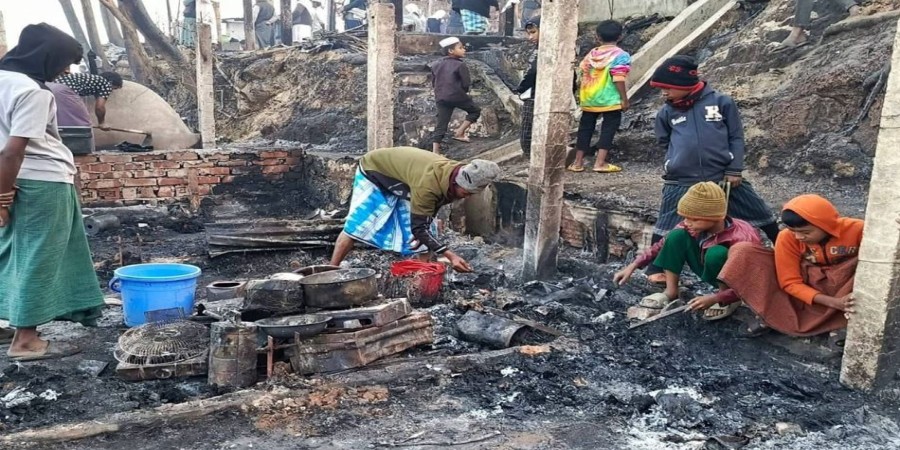
A massive fire swept through a Rohingya camp in Ukhiya late at night, destroying nearly four hundred shelters and leaving hundreds of families displaced under the open sky during winter, as essential belongings, clothing, documents and daily necessities were consumed by the blaze. Witnesses reported that the fire originated from a learning center in the D-4 block and spread rapidly to adjacent shelters and sheds due to the dense settlement pattern and limited access roads inside the camp. Fire Service units struggled for nearly four hours before finally bringing the flames under control, while emergency responders, camp volunteers and locals attempted to evacuate residents and salvage any remaining items. Preliminary assumptions suggest that the fire may have been triggered from a cooking stove, though officials have initiated a formal investigation to determine the exact cause and assess structural vulnerabilities. The incident has renewed concerns over fire hazards inside the densely populated camps, where makeshift structures, limited fire exits, narrow pathways, dry seasonal conditions and the use of alternative cooking methods collectively heighten the risk of rapid fire spread. Families who lost their shelters recounted that homes, learning facilities, small shops and shared community spaces were burned, leaving children, women and the elderly without basic necessities. Over recent weeks, multiple fire incidents have been reported in various parts of the camp complex, prompting questions from humanitarian organizations, local authorities and international observers regarding safety protocols, fire prevention systems, electrical distribution, fuel use and emergency response mechanisms. Experts argue that sustained overcrowding and the absence of fire-resistant infrastructure increase both vulnerability and recovery challenges, particularly during nighttime when evacuation becomes more difficult. Humanitarian agencies have begun assessing emergency needs such as food, clothing, winter blankets, temporary shelter materials, medical support and clean water, as many of the affected families face immediate uncertainty over their living arrangements. The series of recent fire incidents has also drawn attention to broader issues surrounding camp resilience, displacement conditions and the need for coordinated risk management. Specialists have emphasized the importance of regular fire drills, planned construction layouts, risk mapping, smoke detection systems and designated evacuation corridors to prevent future tragedies. Without systematic improvements and rapid rehabilitation, the recurring cycle of fire and displacement may further strain the social infrastructure of the camps, disrupt children’s access to education, deepen psychological pressure on residents and escalate humanitarian challenges during seasonal changes. The latest fire has once again demonstrated how critical safety measures and disaster preparedness are for communities living in high-density settlements with limited autonomy and resources.
reporter